

Evolve TMS · Physician-led care

Transcranial Magnetic Stimulation

An FDA-cleared, non-invasive treatment—delivered while you sit awake in a comfortable chair, then get up and get on with your day.

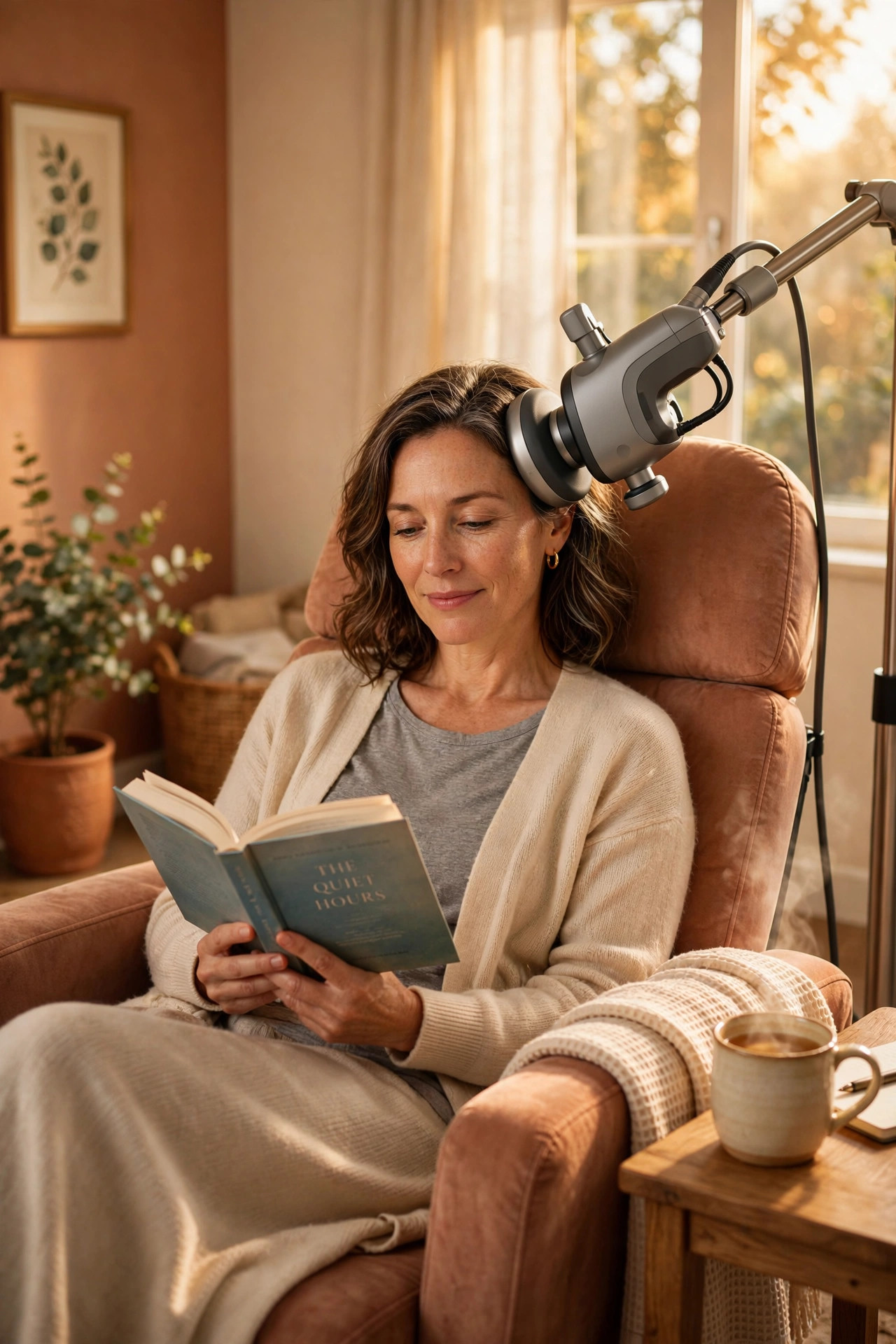
A woman sits awake and relaxed in a comfortable chair, reading a book, while a TMS coil rests gently at the side of her head in a warm, sunlit room
Awake, relaxed, unhurriedYou sit in a comfortable chair—read, rest, or just breathe—while the treatment does its work.
AwakeThroughout treatment
No anesthesiaNon-surgical care
OutpatientReturn to your day
Physician-ledIndividualized planning

Focused treatment begins with the right clinical question.

TMS is FDA-cleared for major depressive disorder and as an adjunctive treatment for obsessive-compulsive disorder. Physicians may also consider TMS for other conditions on an off-label basis—those uses are not FDA-approved and are discussed individually with your doctor during consultation.

Off-label use

In some cases, a physician may consider TMS for a condition it has not been FDA-cleared to treat. Those off-label uses are not advertised treatments, and the evidence supporting them varies. Whether an off-label use could be appropriate in your case is something to discuss with your doctor during a consultation.

Brain injury care at our clinic

Our clinic also evaluates and treats patients recovering from brain injury—through physician-directed rehabilitation at Evolve Neuro Health, part of the Evolve family.

A man rests awake under a soft blanket in a reclining chair during a TMS session, a clinician seated nearby, in a warm room with plants and sunlight
Sessions happen in a quiet, comfortable room—not an operating room, and nothing like a hospital procedure.

What it feels like, in plain words.

Most people arrive picturing something far more medical than what actually happens. A TMS session is quiet, simple, and surprisingly ordinary—in the best way.

  • 1
    You sit down and settle inYou take a seat in a comfortable reclining chair, in your own clothes. No gowns, no IVs, nothing to change into.
  • 2
    You stay awake the whole timeThe coil rests lightly against your head. You can read, listen to music, chat with the clinician, or simply rest.
  • 3
    It feels like a tappingYou’ll hear a clicking sound and feel a rhythmic tapping sensation where the coil sits. It’s unusual at first; most people settle into it quickly.
  • 4
    Then you drive yourself homeThere’s no sedation and no recovery time. When the session ends, you stand up and go on with your day—work, errands, school pickup.
A woman laughing on a golden-hour walk in a park with a friend
I had tried four different medications over the years. Each one either didn’t help enough or left me feeling flat and foggy. I was nervous about TMS, but the sessions themselves were easy—I read through most of them. A few weeks in, I noticed I was laughing again, making plans again. I felt like myself, and I hadn’t realized how long it had been.
A patient’s storyShared anonymously, in her own words. Individual experiences vary, and TMS is not right for everyone—a consultation is the first step.

Gentle pulses. Real neuroscience.

TMS uses a magnetic field to induce a small electrical current in targeted brain tissue. Repeated stimulation can influence cortical excitability and the way brain networks communicate—processes connected to neuroplasticity.

1

Clinical evaluation

We begin with your history, symptoms, prior treatment, goals, and safety considerations to determine whether TMS is appropriate.

2

Individualized targeting

A stimulation location and protocol are selected for the clinical goal. The coil rests outside the head, near the scalp.

3

Treatment while awake

You remain awake. There is no anesthesia, surgery, or medication administered during the session.

4

Back to normal activity

TMS is outpatient care. Most patients can resume their usual activities immediately after a session.

A protocol matched to the goal

Daily sessions

Treatment is commonly delivered on consecutive weekdays, with visit length determined by the protocol.

1–7 weeks

The overall course can range from one to seven weeks, depending on the condition and treatment approach.

Accelerated option

For appropriate patients, accelerated protocols may deliver multiple sessions per day over a shorter course.

Clinical TMS, delivered at home.

We are preparing a mobile service that brings TMS to the patient’s home, removing a common barrier to completing frequent sessions while maintaining physician-directed care.

Launching soon in Los Angeles

To request information or join the mobile TMS launch list, call our team.

Call (310) 414-3891

Care informed by an evolving field.

Neuromodulation research continues to refine how stimulation affects brain networks, how protocols can be personalized, and which measures may help predict response.

Evolve TMS follows this work closely and translates it into clear, grounded education for patients—without overstating what the evidence can support.

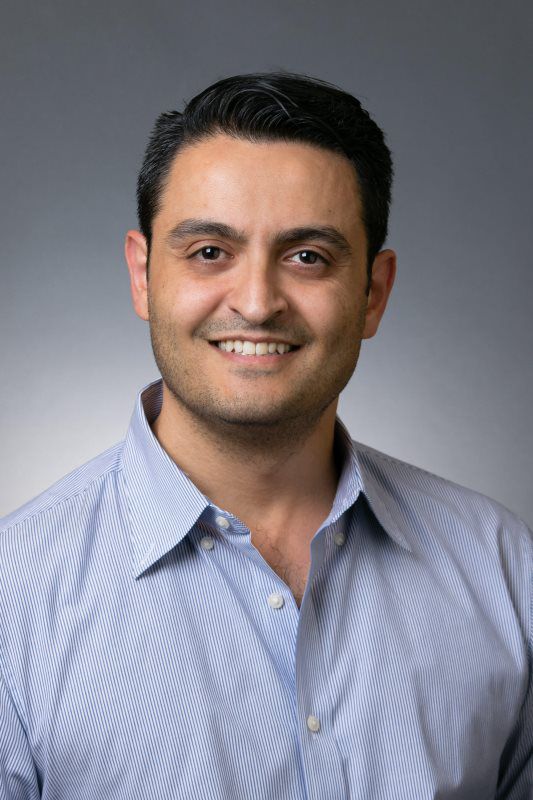
Led by Leon Barkodar, MD

Double board-certified in Neurology and Brain Injury Medicine, Dr. Barkodar brings a neurologist’s perspective to every treatment plan—connecting symptoms, brain networks, and recovery goals.

The approach is direct and evidence-based: careful evaluation, an individualized protocol, and clear communication throughout care.

Portrait of Dr. Leon Barkodar
Leon Barkodar, MDNeurologist · Double board-certified

Why I offer TMS

“Too many of my patients spent years cycling through medications that dulled them or simply didn’t work, and they deserved another option. I offer TMS because it is a proven, gentle way to help the brain recover—one that asks very little of the person receiving it: sit down, stay awake, and let us do the rest.”

— Leon Barkodar, MD

The questions everyone wants to ask.

It’s normal to feel nervous about a treatment you haven’t tried. Here are honest answers to the questions patients ask us most—including the ones that feel scary to say out loud.

For most people, no. You’ll feel a tapping sensation on your scalp and hear a clicking sound with each pulse. Some people find the first session a little uncomfortable, and a mild headache or scalp tenderness can happen early on—but it usually fades as treatment continues, and the intensity can be adjusted. If something feels like too much, you say so, and we adjust.

No—you’re fully awake the entire time. There is no anesthesia, no sedation, and nothing to “wake up” from. You sit in a chair, you can read or rest, and when the session is over you get up and drive yourself home.

No, and this is the most common misunderstanding. ECT passes an electric current through the brain to intentionally cause a brief seizure, and it’s done under general anesthesia. TMS uses gentle magnetic pulses—similar in strength to an MRI magnet—applied from outside the head. There is no seizure, no electric shock, no anesthesia, and no memory loss. The two treatments share almost nothing beyond both being used for depression.

It depends on the protocol your doctor recommends. Sessions generally run somewhere in the range of a few minutes to about forty minutes, and a full course of treatment typically spans several weeks of weekday visits. At your consultation, we’ll lay out exactly what your plan would look like before you commit to anything.

The most common are mild scalp discomfort where the coil sits and occasional headaches, both of which tend to lessen over the first week or so. Because the pulses make a clicking sound, you’ll wear ear protection during sessions. Serious side effects are rare; your evaluation includes screening for anything—such as certain metal implants or a history of seizures—that would make TMS unsafe for you.

Often, yes—that’s exactly who TMS is for. It’s FDA-cleared for depression that hasn’t responded adequately to medication, and many of our patients come to us after trying several. TMS works differently than medication—directly stimulating the brain circuits involved in mood—so a disappointing history with pills doesn’t predict a disappointing result here.

Start with a conversation.

Call to discuss your goals, ask about treatment, or request information about mobile TMS.

(310) 414-3891
Beverly Drive
Los Angeles, California

This site provides general educational information and is not medical advice. Treatment eligibility, protocol, expected benefit, and risk depend on individual evaluation. TMS is FDA-cleared for major depressive disorder and as an adjunctive treatment for obsessive-compulsive disorder; use for any other condition is off-label, is not FDA-approved, and may be discussed with your doctor.